Queretaro's Sierra Gorda
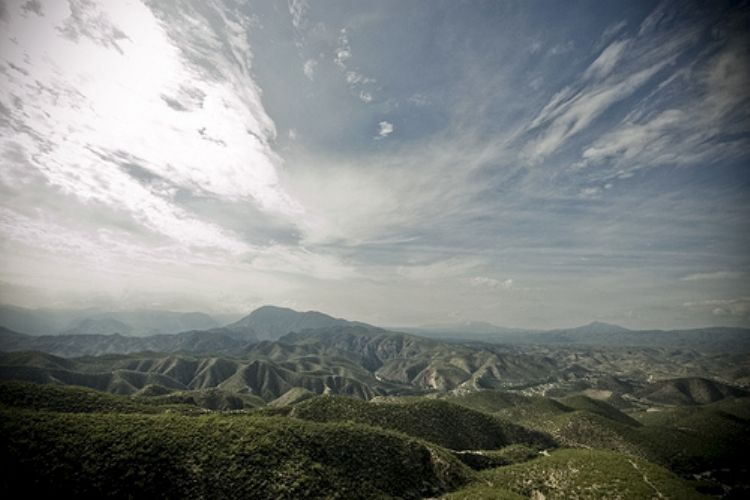
Sierra Gorda is located on the north of the State of Queretaro and is part of the Sierra Madre Oriental mountain range. The Biosphere Reserve of Sierra Gorda was decreed by UNESCO in 2001 as a protected natural area in order to preserve its exceptional wealth of species. The vast biodiversity of its ecosystems is due to the great physiographic complexity of its terrain. The variety of heights range from 300 meters over sea level at Cañón del Río Santa María, up to 3100 meters over sea level at Cerro de la Pigüica. Heterogeneous rain fall greatly favors its extraordinary wild life diversity.
When the Spaniards arrived, this territory was inhabited by many Indian groups. Outstanding among them were the Jonaces, known for their ferociousness, they participated in the Half Moon War in 1749, called as such for the namesake mountain that was the scenario of the last battle between Chichimecas and Spaniards. According to legend, when they realized they had lost the battle, entire Chichimeca families jumped off the mountain in a collective suicide.
The archeological site of Ranas is located 154 Km. from the city of Queretaro. Inhabited between the 7th and 11th centuries, Ranas was one of the cities with greatest cultural and commercial exchange between the people of the region and the Gulf of Mexico. One of the main economic activities was cinnabar mining, a highly valued red mineral dye among Mesoamerican groups.
Toluquilla is an archeological site 110 Km. from San Juan del Rio. It had been abandoned by the time the Spaniards arrived; reaching its peak in the 9th century. This city controlled the commerce of mercury and cinnabar through important commercial ties with Teotihuacan. It developed a very efficient use of space by fillers and extensions for leveling the terrain.
Augustine and Franciscan missionaries started to evangelize Sierra Gorda during the 16th century but were overwhelmed by the hostility of its residents. Dominicans made a second attempt in the 17th century but obtained the same results. Their convents were destroyed soon after and are now an interesting architectural vestige of that controversial era. Friar Junipero Sierra finally achieved an evangelization process in the 18th century, culminating in majestic buildings that we can now observe and be awed by the icons and details that resulted from combining the Chichimeca and Franciscan cultures.
Bucareli Mission was founded in 1797 by Friar Juan Guadalupe Soriano with the purpose of evangelizing Chichimeca and Jonaces groups that were still living in the region. Patios with arches and fountains can still be seen, as well as cells and the chapel. Theology treaties and Latin texts are preserved at this site, priceless vestiges of the Franciscan presence. Every February 4th, the residents celebrate in honor of Saint Francis of Assisi.
A group of Mexican intellectuals presented an initiative to include the Franciscan missions of the Sierra Gorda into UNESCO World Heritage sites, achieving this recognition in July 2003. Today, hundreds of tourists marvel at the preserved Franciscan missions of Jalpan, dedicated to Apostle Santiago; Concá dedicated to Archangel Michael; Santa María del Agua de Landa dedicated to the Virgin of the Immaculate Conception; San Francisco del Valle de Tilaco and Nuestra Señora de la Luz de Tancoyol missions.
Artículo Producido por el Equipo Editorial Explorando México.
Copyright Explorando México, Todos los Derechos Reservados.
Foto: Yeahjaleah